Define the identifier first
An outlet name should connect the work area, patch-panel position and corresponding test result. Agree the naming convention while the design is still being coordinated. If installers, testers and documentation teams invent separate identifiers, the final pack becomes a manual reconciliation exercise. Include the telecommunications space and backbone conventions as well, especially where several buildings or floors share a project. Record how additions will be named after the initial installation.
Specify the evidence that matches the link
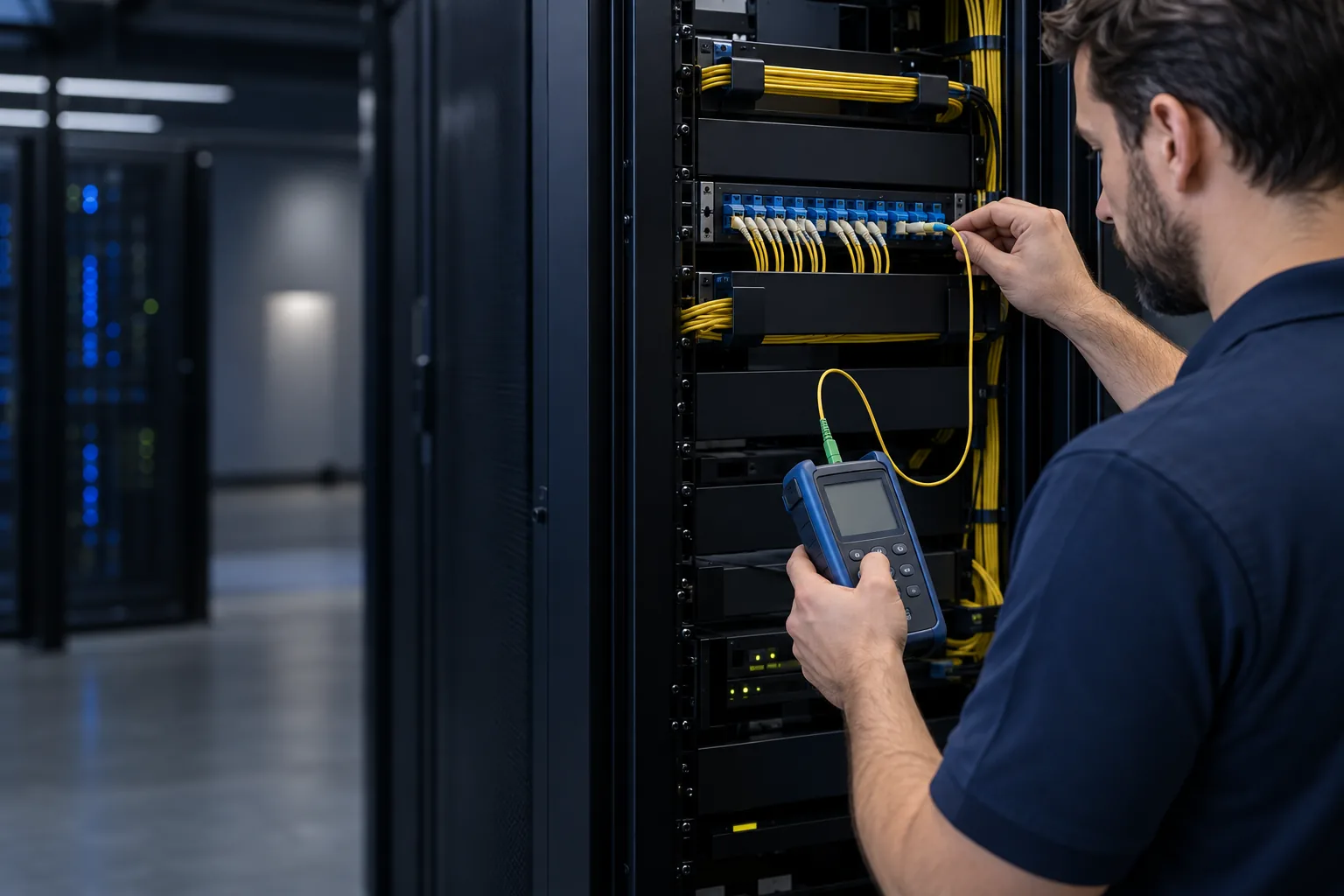
For copper, agree the category and whether acceptance applies to a permanent link or a complete channel. For fiber, end-to-end loss testing and OTDR measurements answer different questions: loss testing evaluates the optical path, while OTDR helps characterize events along it. The test scope should define the relevant methods and reporting requirements. Do not select a single instrument output simply because it produces an impressive-looking report.
Track changes as the route is installed
A route may change because another service occupies the intended space or the final outlet position moves. Record the authorized variation when it happens. Annotate the affected drawing and update the cable schedule before the identifier becomes detached from the installed work. Photograph only where permitted and where the image explains something useful, such as a concealed pathway or enclosure. A collection of unindexed photos cannot replace an as-built record.
Keep native results and readable summaries
A summary helps a project manager see the acceptance state, while native tester files can support later technical review. Define the delivery format before testing starts. Reconcile the number of required links with the results supplied, including failed links that were subsequently repaired and retested. Explain whether a result represents the original installation or a later change. Store the pack in a structure the receiving team can navigate without specialist project knowledge.
Close the loop with operations
Ask the support team to trace a representative connection using only the handover. If they cannot identify the outlet, panel and result, the pack still needs work. Confirm which spare fibers and ports are available and which remain untested or reserved. Document outstanding defects separately from completed acceptance. The final objective is a maintainable infrastructure: a future technician should be able to understand the installed link without reopening every ceiling or relying on the original installer.
Technical reference
This guide combines practical project-planning considerations with relevant manufacturer information. Consult the current product documentation for the selected deployment.
Fluke Networks: fiber testing resources