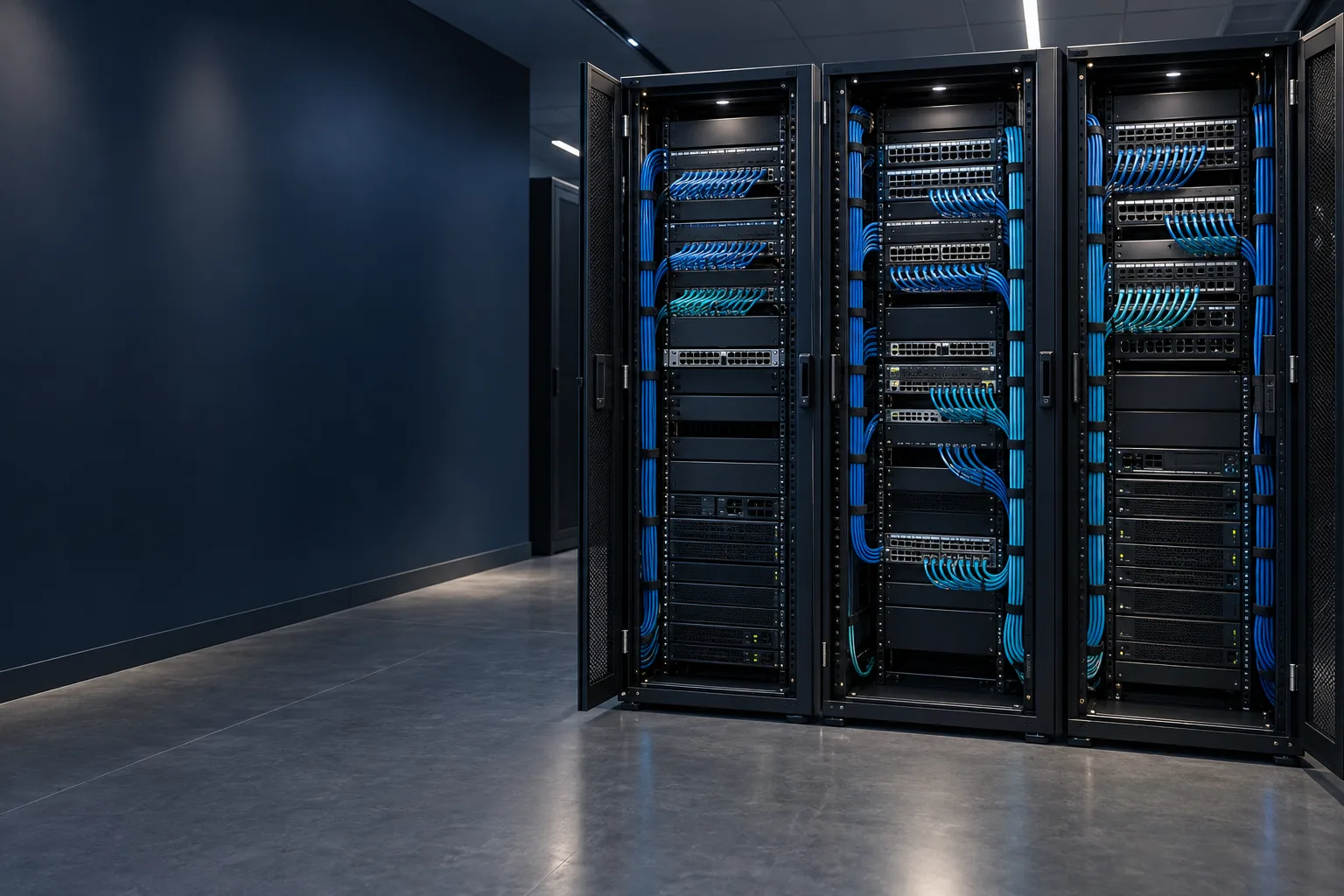
Review room layout, installed equipment and supporting infrastructure against the intended workloads. Identify space, access and environmental dependencies before selecting a modernization or expansion scope.
DeliverableRoom assessment and improvement priorities.
Plan equipment positions, service clearances and patching within the available footprint. Coordinate rack depth, equipment loading and maintenance access with the proposed hardware schedule.
DeliverableRack elevations and room layout.
Assemble and position approved cabinets in a prepared environment. Verify dimensions, access and mounting arrangements, coordinating anchorage or structural requirements with the appropriate responsible trade.
DeliverableInstalled-rack inspection and layout record.
Install supported physical servers from an approved build specification. Confirm hardware inventory, management connectivity and operating-system responsibility before commissioning the agreed host functions.
DeliverableServer inventory and deployment checklist.
Configure supported virtualization hosts against an agreed architecture. Document resource allocation and management access, and validate representative workloads before moving production services.
DeliverableHost configuration and validation report.
Connect approved storage systems to the server environment. Verify interfaces, logical allocation and path requirements with application owners, distinguishing storage availability from a complete backup strategy.
DeliverableStorage mapping and connectivity evidence.
Map equipment power needs to available approved rack distribution. Coordinate circuit capacity and electrical work with qualified providers rather than treating IT rack installation as an electrical contracting scope.
DeliverablePower allocation schedule and dependency list.
Coordinate approved UPS equipment interfaces and graceful shutdown requirements. Electrical installation and capacity decisions remain with qualified parties; IT work covers agreed monitoring and host integration.
DeliverableUPS interface record and shutdown test plan.
Review equipment airflow direction, rack arrangement and observed room conditions. Coordinate cooling requirements with the facility specialist before installation so IT and mechanical designs remain aligned.
DeliverableAirflow observations and coordination requirements.
Install and organize approved rack-to-rack or rack-to-panel copper connections. Confirm channel design, labeling and applicable testing scope before connecting live services.
DeliverableCable schedule and test records.
Install approved optical patching between racks, distribution frames and equipment. Confirm connector types, polarity and fiber compatibility so the commissioned optical path matches the design.
DeliverableFiber connection map and verification results.
Reorganize approved patching and pathways to improve access and traceability. Schedule changes around live-service constraints and record any links requiring later replacement or additional capacity.
DeliverableBefore/after evidence and updated patch schedule.
Review opportunities to combine underused systems or reduce rack footprint. Account for workload dependencies, licensing and recovery requirements before proposing a consolidation sequence.
DeliverableConsolidation options and dependency analysis.
Plan and execute an approved technology-room move with clear sequencing and acceptance checks. Coordinate premises, carriers, power and environmental readiness before committing to a cutover window.
DeliverableRelocation runbook and asset reconciliation.
Connect supported room-condition sensors to the agreed platform. Define locations, thresholds and alert ownership with facilities, without representing equipment alerts as a staffed response service.
DeliverableSensor register and alert test evidence.
Provide approved management connectivity for supported equipment. Document access paths and ownership and test recovery access with the customer's administrators before handover.
DeliverableManagement topology and access test record.
Replace agreed server hardware in coordination with workload and application owners. Stage the new equipment, record migration dependencies and preserve rollback options before retiring the old host.
DeliverableRefresh plan and transition evidence.
Validate agreed rack, cabling, equipment and management requirements as a coordinated system. Assign unresolved facility or vendor issues clearly so acceptance reflects the commissioned scope.
DeliverableIntegrated commissioning report.
Record installed equipment identities, rack positions and ownership references. Reconcile the physical inventory with the supplied equipment schedule to support maintenance and future changes.
DeliverableRack-based asset register.
Document routine access, equipment dependencies, escalation and approved recovery procedures. Use the installed configuration as the reference so the room can be maintained by the nominated operations team.
DeliverableServer-room operations and handover manual.