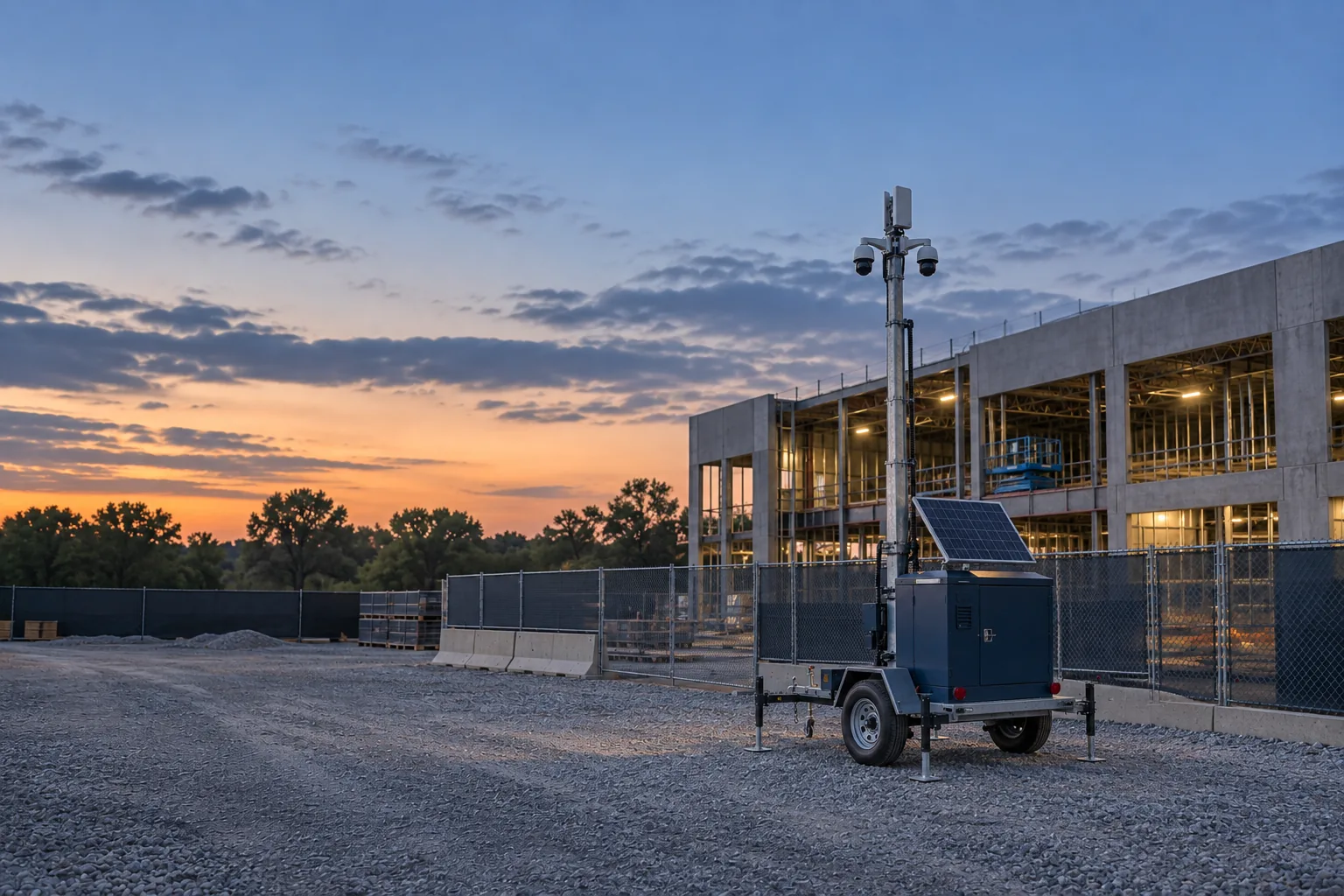
Review the intended site period, viewing objectives and available utilities before proposing a temporary system. Confirm access permissions and operating ownership so installation is feasible for the actual location.
DeliverableTemporary deployment brief and prerequisites.
Plan appropriate camera positions and mast requirements for the approved application. Coordinate structural suitability, safe placement and wind exposure with the responsible supplier or qualified specialist.
DeliverableMast placement plan and supplier requirements.
Install approved cameras for a defined site or event period. Select suitable mounting, power and connectivity, keeping removal and restoration responsibilities clear from the start.
DeliverableTemporary camera register and image checks.
Configure camera views around agreed construction access points and boundaries. Review changing obstructions and site phases, avoiding claims that video coverage replaces physical controls or site supervision.
DeliverablePerimeter view plan and commissioning evidence.
Connect supported cameras at a location without a conventional office network. Confirm available carrier coverage, equipment compatibility and data requirements before accepting a communications design.
DeliverableConnectivity assessment and link tests.
Configure an approved cellular router or gateway for the temporary system. Validate site signal and data plan ownership, recognizing that carrier conditions can change and affect remote access.
DeliverableGateway configuration and observed signal record.
Install supported radio links where a suitable path and mounting arrangement exist. Validate actual link performance and document conditions that could affect operation during the deployment period.
DeliverableBackhaul plan and acceptance measurements.
Coordinate approved solar and battery equipment with the system power demand and site conditions. Leave electrical and structural design to responsible qualified parties and document expected operating assumptions.
DeliverablePower-demand schedule and supplier coordination pack.
Integrate approved backup power for temporary camera equipment within the agreed scope. Verify operating behaviour under a controlled interruption rather than promising runtime without representative measurement.
DeliverablePower interruption test and capacity assumptions.
Install supported network and recording equipment inside suitable protected enclosures. Coordinate cable entries, environmental requirements and service access so equipment is not left exposed to weather or damage.
DeliverableEnclosure layout and installation inspection.
Configure local recording for the approved mobile or temporary camera system. Check storage settings and retrieval procedures, including what happens when the remote communications link is unavailable.
DeliverableRecording policy and playback evidence.
Enable authorized remote viewing through the supported platform. Confirm account ownership, device compatibility and connectivity limits, with access restricted to the customer's approved operators.
DeliverableRemote access setup and user checks.
Configure supported motion or event notifications for agreed camera zones and schedules. Test representative conditions and assign recipients without suggesting that a notification guarantees a human response.
DeliverableEvent rules and notification test record.
Define how an authorized customer team or separately contracted provider reviews live video and handles events. Document handoffs and availability rather than inventing an FBT-operated monitoring centre.
DeliverableMonitoring workflow and responsibility matrix.
Connect a supported surveillance platform with an approved external monitoring provider where commercially arranged. Confirm compatibility and escalation rules with that provider before commissioning event delivery.
DeliverableProvider integration checklist and signal tests.
Move a temporary surveillance system as the work area changes. Reassess viewing positions, power and communications at the new location and update the operational records after recommissioning.
DeliverableRelocation record and refreshed coverage plan.
Plan temporary technical deployment around approved event access and operating periods. Confirm permissions, removal timing and video ownership with the event organizer before equipment is positioned.
DeliverableEvent deployment plan and handover checklist.
Provide agreed checks of temporary cameras, recording and connectivity during the deployment. Record observed faults and arrange corrective attendance subject to the contracted scope and resource availability.
DeliverableHealth-check record and action log.
Assist authorized users with supported video retrieval and export functions. Follow the customer's handling instructions and preserve relevant timestamps without claiming forensic certification or investigative authority.
DeliverableExport record and authorized handover notes.
Remove approved temporary equipment and reconcile the asset inventory at the end of deployment. Coordinate data retention, equipment return and site restoration responsibilities before closing the work order.
DeliverableRemoval checklist and asset reconciliation.