Regina
Downtown · Warehouse District · East Regina · South Regina
ENTERPRISE TECHNOLOGY / Saskatchewan
IT infrastructure, integrated physical security, managed IT, website and app development for organizations in Saskatchewan. Keep distributed technology programmes coordinated.
Request a ConsultationAreas covered
Select the location relevant to your project. Onsite resources are confirmed for the exact premises and scope; digital and engineering work can also be coordinated remotely.
Downtown · Warehouse District · East Regina · South Regina
Downtown · North Industrial · Nutana · Stonebridge
Downtown · Northwest · South Hill
Downtown · South business areas · Other district projects by confirmation
Saskatchewan
Regina, Saskatoon, Moose Jaw and Prince Albert
Use a provincial address register and confirmed regional resources, with individual scope and acceptance evidence for each facility.
Delivery uses coordinated remote, regional, partner and field resources. The scope, address, required skills and available attendance are confirmed before a site commitment. This service-coverage page does not represent a separate branch office.
Priority capabilities
A coordinated technology partner for Saskatchewan: connect the facility, the people and the applications instead of procuring isolated installation tasks.
Saskatchewan coverage is organized around Regina, Saskatoon, Moose Jaw and Prince Albert. A distributed technology programme needs clear planning for materials, travel and remote technical ownership.
Connect business networks, structured cabling and fibre, wireless coverage, server environments and cloud platforms through a coordinated architecture. Agree system ownership and acceptance before individual equipment is selected.
Explore network & IT infrastructure
Inter-city distances make site readiness and correct equipment staging essential to a useful attendance window.
Coordinate physical security, communications, meeting-room AV and supported building controls with the same facility brief. Site interfaces, specialist trade responsibilities and authorized operating scenarios determine the actual scope.
Explore integrated physical security
A Saskatchewan organization with several operating locations can combine a shared website with an application for requests and site status. Agree the record structure across Regina, Saskatoon, Moose Jaw and Prince Albert before development so remote technical ownership and local operational responsibility remain connected.
Custom business software, enterprise websites, web portals, mobile applications and supported API integrations. Remote technical delivery is scoped to your product owner, users and release requirements.
Explore software, web & app solutionsServices
28 service scopes across infrastructure, integrated systems, business operations and digital products. Each engagement defines its deliverables and interfaces. Onsite and remote responsibilities are agreed for the actual project.
Design and modernize business LAN and WAN environments across offices, operational facilities and branches. Bring switching, routing, device segmentation, connectivity and management into one architecture, with migration planning and acceptance based on the applications and users the network must support.
Network architecture, configuration baseline, migration plan and validation records.
Bring surveillance, access control, intrusion detection and intercom requirements into one coordinated design. Work from authorized use cases, operating responsibilities and the layout of the premises. Define interfaces and acceptance tests before procurement or deployment of individual devices.
System architecture, device schedules, interface matrix and commissioning evidence.
Deliver a complete commercial cabling programme from survey and pathway coordination to installation, certification and handover. Plan the infrastructure around work areas, building devices and future capacity. Outlet, rack and patching tasks form part of the system scope rather than isolated service purchases.
Cabling design, labelled connection records, certification results and as-built documentation.
Plan wireless connectivity for staff, visitors and operational devices using the actual building and application requirements. Coordinate survey, access-point placement, network configuration and validation around occupancy, device behaviour and the materials or obstructions affecting the site.
Wireless design, deployment settings, validation findings and an operational handover.
Create a custom business website with a structured content model, responsive interfaces and a clear enquiry or customer journey. Include accessible interaction, crawlable content and technical search foundations. Agree editorial ownership, integrations, deployment and maintenance as part of the website scope.
Website source, content structures, responsive templates and deployment handover.
Develop browser-based tools for customers, staff or partners where a conventional website cannot support the workflow. Define roles, forms, approvals, integrations and data handling before implementation. Test realistic tasks and provide the application, deployment instructions and operational ownership needed for ongoing use.
Working portal, role model, integration documentation and acceptance records.
Create mobile application experiences around the intended users, devices and business workflow. Confirm platform choices, backend interfaces, offline needs and release responsibilities early. Deliver tested application builds with source, deployment guidance and a clear maintenance boundary for future device and platform changes.
Application source and builds, API contracts, device testing and release guidance.
Turn fragmented technology requirements into an investment and delivery roadmap. Assess business workflows, infrastructure dependencies, legacy platforms and ownership before selecting projects. Coordinate the physical estate with cloud, communications and business applications so each phase has a clear operational purpose.
Current-state assessment, options appraisal, dependency map and phased technology roadmap.
Plan or refresh the technical environment supporting business systems. Coordinate rack capacity, connectivity, server platforms, power and cooling interfaces with the appropriate facility specialists. Establish ownership of each dependency and provide a maintainable record of the commissioned environment.
Room layout, equipment schedule, interface register and commissioning documentation.
Connect buildings, floors and equipment rooms through a planned fibre backbone. Review distances, pathways, cable selection, termination, interfaces and testing before implementation. Assign civil, electrical and specialist site responsibilities explicitly where the agreed route crosses those disciplines.
Backbone design, fibre schedules, test evidence and connection documentation.
Move agreed workloads and business services through a controlled migration plan. Review dependencies, accounts, data movement, licensing and rollback before cutover. Coordinate provider responsibilities with the client team and validate the business workflows affected by the move.
Migration runbook, platform configuration, acceptance results and ownership records.
Connect collaboration, business email, document workspaces and user devices around the way teams operate. Plan account transitions, permissions, shared resources and staff onboarding together. Establish a usable support model so the workplace remains manageable after the initial implementation.
Workplace configuration, onboarding guides and administration handover.
Define an ongoing operating scope for supported business platforms, users and infrastructure. Combine request handling, routine administration, asset records and planned maintenance with clear escalation ownership. Support hours, included activities and service commitments are agreed for the actual engagement.
Service scope, supported-system register, operating procedures and reporting arrangements.
Implement backup arrangements around the applications and information the organization needs to recover. Agree data ownership, retention, storage locations and restoration access before configuration. Include representative restoration checks rather than treating a completed backup job as proof of recoverability.
Backup configuration, retention schedule, restoration evidence and operating instructions.
Translate business interruption concerns into practical technology recovery priorities. Identify dependencies between systems, data, people and external providers, then agree the sequence and evidence for recovery exercises. Recovery objectives are project requirements to validate, not blanket service guarantees.
Recovery dependency map, response runbook and documented exercise findings.
Coordinate business calling, supported communications platforms and collaboration workflows. Plan extensions, call routing, endpoint provisioning and carrier dependencies with the staff who use the service. Validate representative call scenarios and document the arrangements required for ongoing administration.
Communications design, call-flow records, configuration and acceptance tests.
Design collaboration spaces around room dimensions, participant positions, meeting platforms and day-to-day use. Coordinate displays, microphones, cameras, control interfaces and the underlying network. Test intelligibility, presentation paths and remote participation as complete user scenarios.
Room design, integrated configuration, commissioning results and user guidance.
Coordinate display, signage and point-of-sale technology with the business environment. Prepare connectivity, device placement, content ownership and interfaces with the nominated POS or signage platform. Payment processing and proprietary platform responsibilities remain with the contracted specialist providers.
Device and connectivity plan, supported integration checks and handover records.
Plan surveillance coverage, recording, storage and authorized video-management workflows around the facility. Review viewing objectives, placement, environmental conditions and operator access. Commission the supported system against agreed scenarios and document responsibilities for retention and administration.
Coverage plan, recording configuration, scenario tests and operator handover.
Coordinate doors, access permissions, visitor workflows and supported building interfaces. Agree door hardware and specialist trade responsibilities with the project team. Validate authorized entry scenarios and operating procedures without assuming a particular compliance certification or emergency-system scope.
Door and credential schedules, interface records and validated operating scenarios.
Connect intrusion detection, entry communication and the nominated operating procedures for the premises. Establish which events need notification, who receives them and which supported systems interact. Monitoring, response and external service arrangements are separately confirmed in the project scope.
Zone and intercom schedules, event configuration and agreed notification tests.
Scope relocatable surveillance for temporary premises, construction phases and changing project environments. Review power, connectivity, mounting, recording and authorized viewing arrangements. Any monitoring personnel, operating hours and response process must be specifically confirmed; a staffed monitoring centre is not assumed.
Deployment plan, connectivity checks, viewing setup and operating responsibilities.
Coordinate supported building technology around practical occupancy and operator requirements. Review network dependencies, control interfaces and integration ownership with the relevant trades. Test useful operating scenarios and provide documentation that lets the client understand the controls and maintain the accepted configuration.
Integration map, control scenarios, commissioning records and operator guidance.
Deliver approved installation, move, add and change work through a prepared site work order. Confirm resource availability, access, equipment, technical instructions and remote engineering support before attendance. Return evidence that allows the customer to reconcile the actual result with the approved task.
Scoped work order, site evidence, asset updates and exception report.
Coordinate a repeatable technology change across multiple premises. Establish a reference design, pilot, readiness gates, deployment waves and site-specific exceptions. Connect field activity to central acceptance so each location has a traceable status and consistent technical handover.
Rollout plan, site readiness register, deployment records and programme reporting.
Support partner-led programmes with technical preparation, field coordination, documentation and agreed service boundaries. Work to the partner’s instructions, brand arrangements and acceptance criteria while keeping work-order ownership and escalation clear across organizations. Geographic attendance is confirmed per assigned site.
Partner onboarding pack, delivery procedures, evidence standards and escalation map.
Build software around a defined business process, users and data model. Translate requirements into an implementation backlog, tested application and controlled release. Agree integration boundaries, source-code ownership and maintenance responsibilities so the organization receives a product it can operate and extend.
Requirements, application source, test results, deployment and maintenance documentation.
Connect approved applications so business information can move through a controlled, documented workflow. Map data ownership, supported interfaces, validation, failure handling and reconciliation before implementation. Test representative records and provide operational guidance for the teams responsible for the connected systems.
Interface specifications, integration implementation, test cases and support runbook.
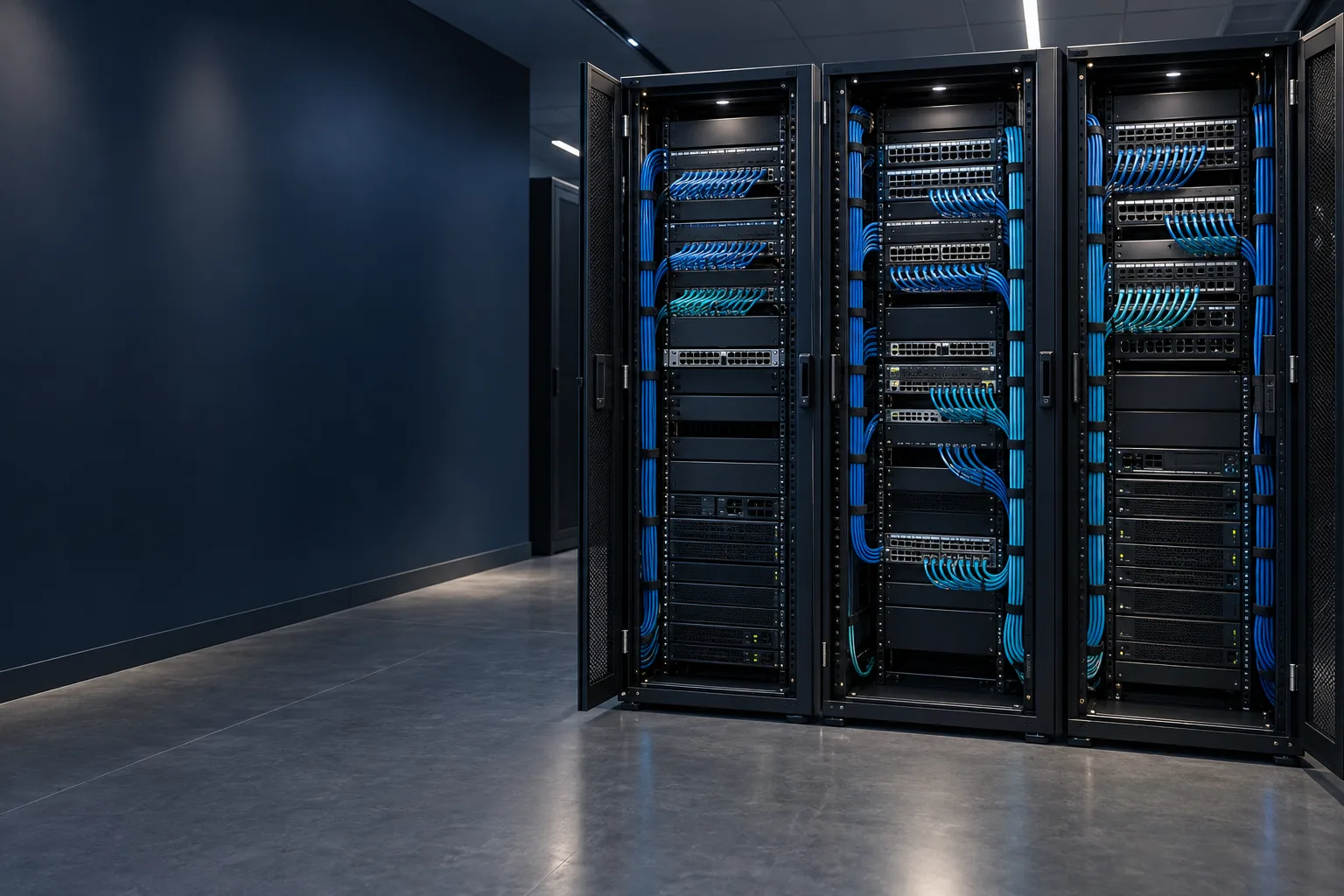
A Saskatchewan project can connect infrastructure and building systems with the websites, applications and workflows people use. These environments are illustrative; the actual technology and acceptance criteria are defined in your project brief.
Request a ConsultationDelivery approach
Agree the scope, users, premises and acceptance needs.
Document the architecture, device schedules and dependencies.
Confirm materials, access and the resources assigned to the work.
Implement the approved configuration and physical installation.
Test the actual workflows and record exceptions with owners.
Transfer documentation and agree the operating responsibilities.
Scope and responsibilities
An enterprise engagement can include architecture, deployment, integration, testing, documentation and ongoing operations. The accepted scope assigns equipment supply, site permissions, specialist work and third-party interfaces.
Solutions
Explore the master solutions for detailed technical scope, system interfaces and engagement options.
Who We Serve
Saskatchewan
Delivery uses coordinated remote, regional, partner and field resources. The scope, address, required skills and available attendance are confirmed before a site commitment. This service-coverage page does not represent a separate branch office.
Regina, Saskatoon, Moose Jaw, Prince Albert. Send the exact premises address so access, travel and available resources can be checked.
Inter-city distances make site readiness and correct equipment staging essential to a useful attendance window.
Use a provincial address register and confirmed regional resources, with individual scope and acceptance evidence for each facility.
A Saskatchewan organization with several operating locations can combine a shared website with an application for requests and site status. Agree the record structure across Regina, Saskatoon, Moose Jaw and Prince Albert before development so remote technical ownership and local operational responsibility remain connected. Software delivery can be coordinated remotely. Confirm the product owner, interfaces, data responsibilities and release criteria in the consultation.
Use common configurations and evidence formats with individual site records. Confirm travel, materials and suitable attendance independently for each premises.
Yes, through the provincial consultation with exact addresses and tasks. The page supports qualification without implying a staffed branch or guaranteed onsite availability.
Verify materials, access and the technical decision-maker before attendance. Keep site readiness separate from proposed installation dates in programme reporting.
Use inventories, connection schedules, configurations and accepted test evidence per location. Assign responsibility for updating those records after later changes.
Request a Consultation
Share the premises, business requirement and systems involved. Include website, application or integration needs alongside infrastructure work so the consultation can address the complete outcome.
FUTURE BRIDGES
From one facility to a coordinated international programme, start with the scope, location and outcome you need.